Decode Morse code
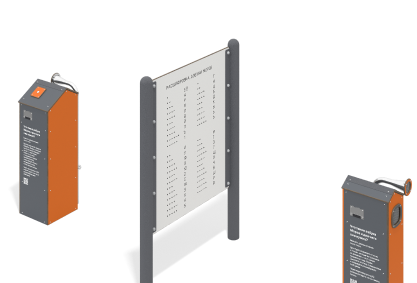
Encrypt a message and pass it on to a friend, just like they did back in the 19th century. All you will need are dots, dashes and pauses. Twist the knob to charge the battery. Now think of a message you want to encrypt. It can be made up of letters and numbers.
Article by N+1
3 min to read · May 24 2023

present…
Instruction
Think of a message you want to encrypt. It can be made up of letters and numbers. Follow the clues! Turn the knob to recharge the battery. To send the message, press the button: a short press is a "dot" and a long press is a "dash". Now check with your voice through the intercom to see if your friend was able to decipher the message.
How it works
You may have heard of the SOS distress signal, which is a Morse code. The distress signal can be given only in case of extreme danger. Here's its sequence: three dots, three dashes, three dots without pauses between the letters (you can practice it yourself!).
The alphabet itself is named in honor of Samuel Morse, an American artist and one of the inventors of the telegraph. This method of transmitting information is still popular today, although almost a century and a half has passed since its invention.
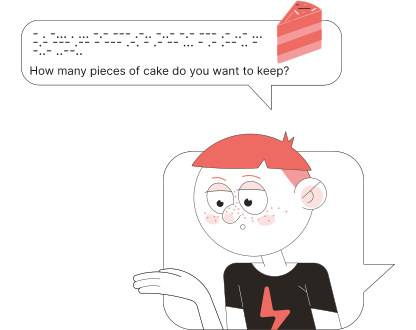
Morse code is mainly popular because of its simplicity. To convey a message, all we need are dots, dashes and pauses in between. Moreover, the message can be transmitted not only by sound, but also by light and electric signals. Another advantage of code is that it can be used anywhere in the world: it is an internationally recognized communication standard.
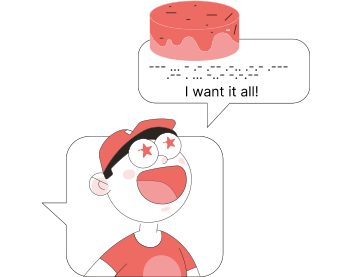
Morse code is also one of the most accessible ways of transmitting information. The signal can be received even at long distances and in conditions of strong radio interference, messages can be encoded manually, and messages can be recorded and played back with the simplest devices. This is especially relevant in emergencies when all other equipment has failed. For example, Morse code is sometimes used in the navy and in the Ministry of Emergency Situations.

You can also use morse code as an alternative form of communication. For example, try to "blink" your message with your eyes to a person who knows the alphabet.
This article is about our product:
More articles by N+1
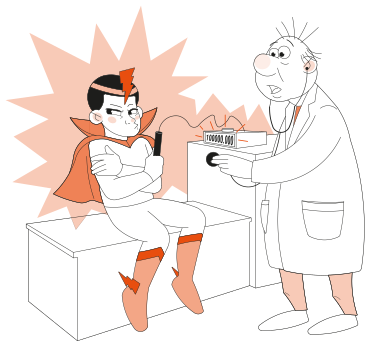
Electric Quest
Imagine you are an explorer. Every element here can be explored. Go through games for logic and dexterity, explore all possible moves and measure the strength of the wind.

Shadow play
Create your very own shadow theater! Choose the animals and other silhouettes you want to show and adjust their size with your hands.
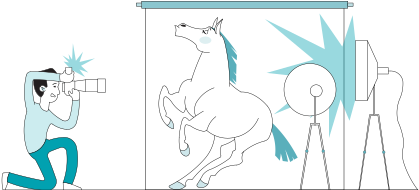
How the movie was made
Spread the big disks and you'll see animation! The pictures seem to come to life. This principle of changing frames is the basis of all movies and cartoons.
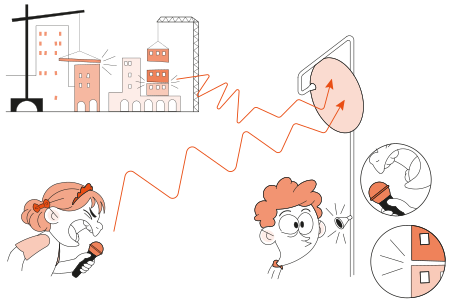
Sounds of the city
Put your ear to the funnel. You'll hear the sounds of the city. It's as if the street is at arm's length! All thanks to the parabolic antenna.
Guess the melody
Spread the big disks and you'll see animation! The pictures seem to come to life. This principle of changing frames is the basis of all movies and cartoons.
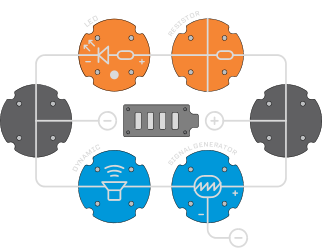
Assemble the electrical circuit
Do an experiment with current! Turn the knob to charge the battery. Assemble an electrical circuit by turning the wires, speaker, resistor, signal generator and LED.

mail@leber.groupReference information
Privacy Policy
©2026, All rights reserved