Assemble the electrical circuit
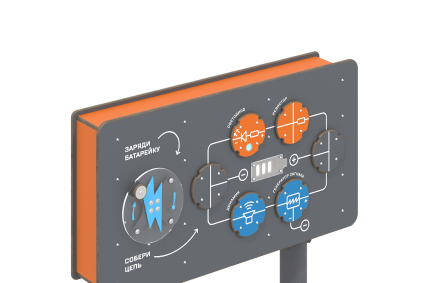
Do an experiment with current! Turn the knob to charge the battery. Assemble an electrical circuit by turning the wires, speaker, resistor, signal generator and LED.
Article by N+1
3 min to read · May 24 2023

present…
Instruction
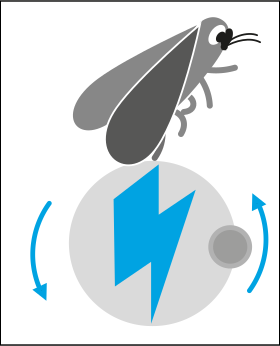
First you need to turn the handle until the battery is charged (for about 10-20 seconds). After that you can assemble the electric circuit.
Rotate the round chips. Refer to the drawings on the chips. There are hints on how to place them correctly.

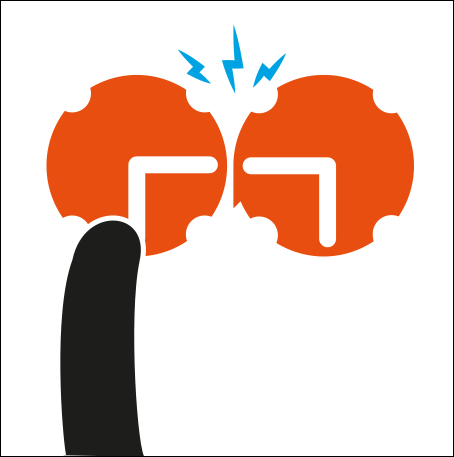
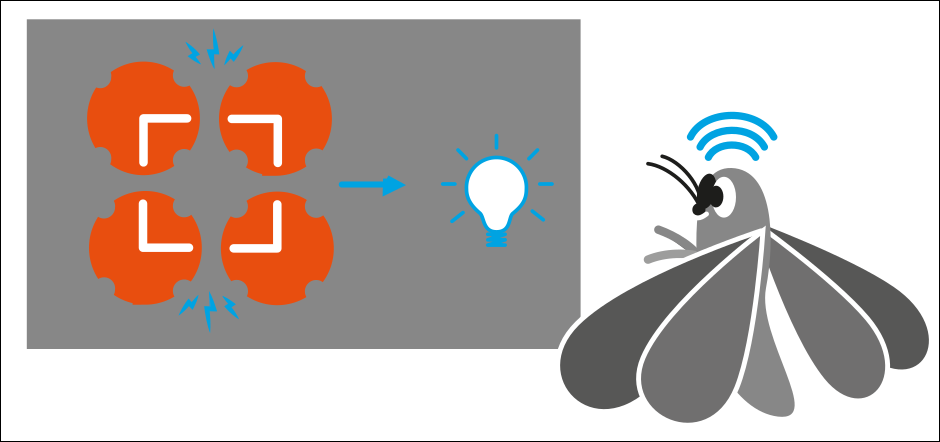
If everything is done correctly, current will flow through the chips and the LED will light up or the speaker will sound.
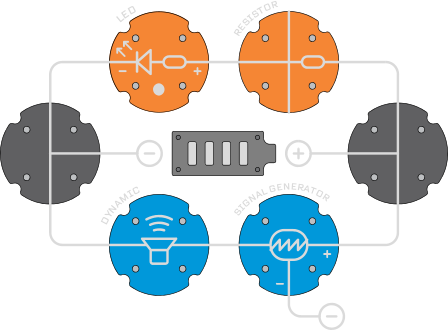
Hints
Mechanical energy turns into electric current when you twist the handle of the generator.
The wires are the lines in the schematic. Check that they are shorted into a single path

Battery
The battery stores the charge and transfers the electricity to the circuit.
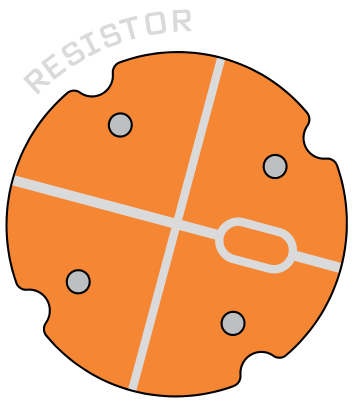
Resistor
A resistor is a resistance in an electrical circuit. One resistor is already in the circuit - it is installed next to the LED and protects it from burning out. You can include a second resistor, then the resistance will be higher and the LED will burn dimmer.
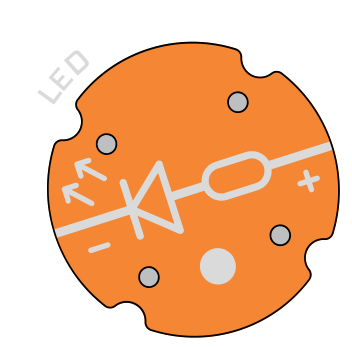
LED
An LED is a light source. Correct polarity is important for it, so check the plus and minus positions.
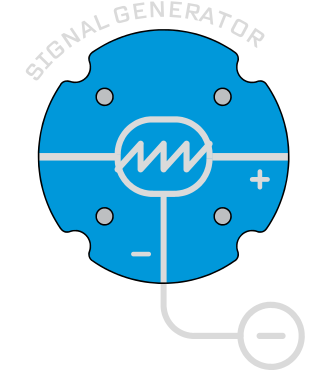
Signal generator
Inside this chip are several microchips. When power is applied, these chips produce an electrical signal output for the speaker.
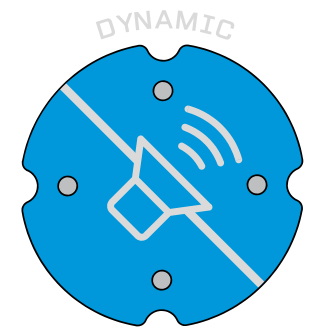
Dynamic
The speaker is the sound source, polarity is not important to it in this circuit.
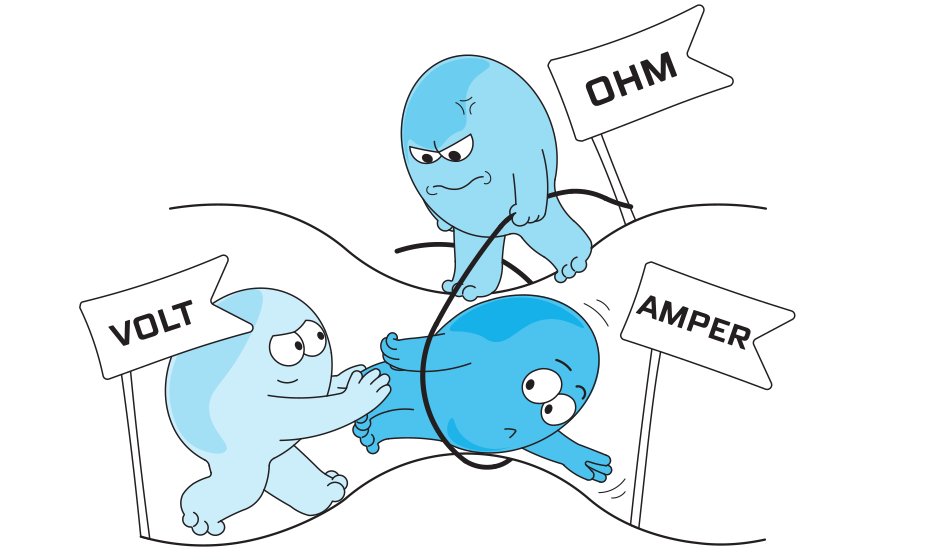

How an electrical circuit works
Everything around us is made up of tiny particles - atoms. But atoms themselves are made up of even smaller "parts" - neutrons, protons and electrons. Protons and electrons are oppositely charged and attracted to each other. Protons are in the center of the atom, and electrons rotate around it.
Atoms can give and take electrons from each other. If some atoms have too many electrons and others have not enough, electrons will run to where they are missing. This flow of electrons is called an electric current.
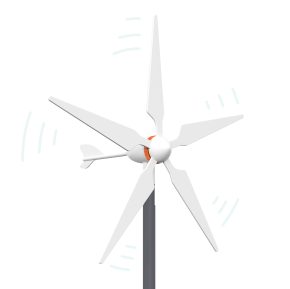
An electric generator can separate electrons and protons. It can be powered by energy from sunlight or burning fuel, from the flow of water or wind, and even from your personal energy when you apply force. For example, in our case, when you twist a handle.
The "plus" sign marks the place where there are more protons, and the "minus" sign marks the place where there are more electrons. If there is a suitable road between the minus and the plus, an electric circuit is created, along which electric current flows. By turning the wire chips, you change the direction of the road on which the electric current can run. The wires don't care which way the electrons run. Turn the wires as you wish to build an electrical circuit.
There are parts in our circuit for which the direction of current is crucial. These are LEDs. LED has two poles - its own "plus" and "minus". In order for the LED to work, its polarity must coincide with the plus and minus of the current of electricity in the circuit, so the current can pass through the LED only in one direction. Try spinning the LED chip — and you will see that its bulb lights up only when the pluses and minuses are in their places.
Electricity can be converted not only into light, but also into sound — with the help of a speaker. Try putting together an electrical circuit so that the speaker receives an electrical signal from a generator and makes a sound.
Another part of our circuit is a resistor. The resistor prevents electrons from running through the circuit, this is called resistance. Imagine that the resistor makes the wire that the electrons run through very viscous and sticky. Therefore, it is harder for the electrons to run and the current becomes smaller.
Try to assemble the circuit so that the LED is after the resistor, and then turn the resistor chip. You will see that in one position the resistor creates resistance, the current is reduced and the LED does not burn as brightly. In the other position, the resistor does not prevent electrons from running, and the LED burns much brighter.
This article is about our product:
More articles by N+1
Electric Quest
Imagine you are an explorer. Every element here can be explored. Go through games for logic and dexterity, explore all possible moves and measure the strength of the wind.
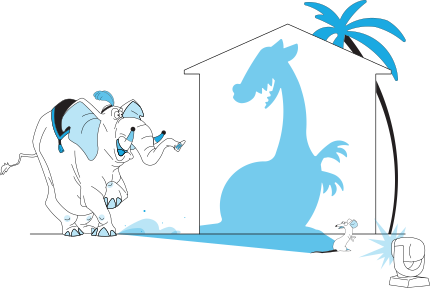
Shadow play
Create your very own shadow theater! Choose the animals and other silhouettes you want to show and adjust their size with your hands.
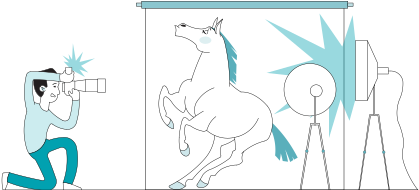
How the movie was made
Spread the big disks and you'll see animation! The pictures seem to come to life. This principle of changing frames is the basis of all movies and cartoons.
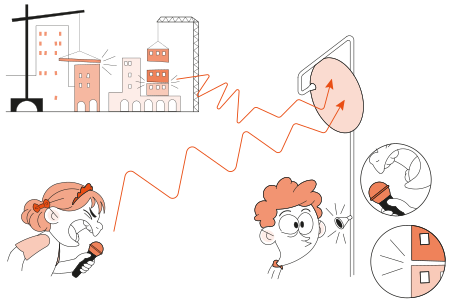
Sounds of the city
Put your ear to the funnel. You'll hear the sounds of the city. It's as if the street is at arm's length! All thanks to the parabolic antenna.
Guess the melody
Spread the big disks and you'll see animation! The pictures seem to come to life. This principle of changing frames is the basis of all movies and cartoons.
Put a melody together
Turn the knob to play the music. Can you mentally divide this melody into parts of different instruments? Let's give it a try! Move the tokens to the left (off) and right (on).